

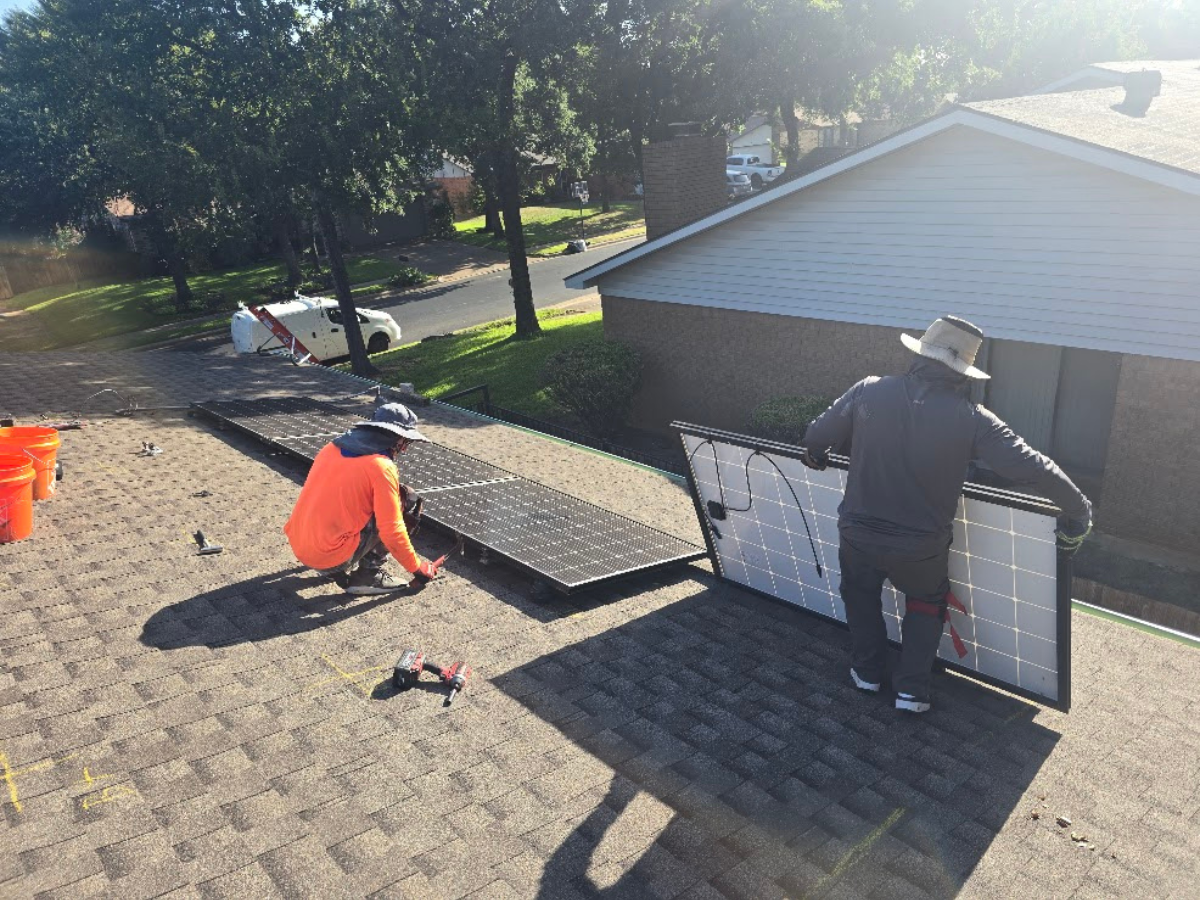

Solar Panel Removal & Reinstall Near Me — Professional Detach and Reset Service in DFW
Solar panel removal and reinstall in the Dallas-Fort Worth metroplex is called a detach-and-reset — the process of safely removing your panels before a roof replacement and putting them back once the new roof is finished. Remove Solar Reset provides licensed detach-and-reset service across 9 DFW counties (Collin, Dallas, Tarrant, Denton, Rockwall, Kaufman, Ellis, Johnson, and Parker) with flat-rate pricing and a 10-year workmanship warranty. Call (469) 283-1089 for your free quote.
What Is a Detach and Reset?
A detach-and-reset is the industry term for a two-phase solar service: first, a TDLR-licensed electrician removes your solar panels, racking, conduit, and rapid shutdown equipment from the roof; second, after your roofer completes the new roof, the same electrician reinstalls everything in the original or optimized configuration. The panels themselves are not being replaced — they are temporarily taken off, stored safely, and put back on.
This differs from a permanent removal (where the system is decommissioned entirely) and from a system upgrade (where old panels are swapped for newer models). In a detach-and-reset, your existing panels, inverters, and wiring are preserved. The goal is to get them off the roof without damage so your roofer has a clean deck to work on, then get them back on without voiding manufacturer warranties or violating the Texas Department of Licensing and Regulation (TDLR) electrical code requirements.
The electrical work involved — disconnecting live DC wiring, de-energizing rapid shutdown systems per NEC 690.12, and isolating the inverter from your main service panel — is why Texas law requires a Master Electrician license for this job. A roofer or general contractor cannot legally perform it, and attempting it without proper lockout/tagout procedures creates electrocution hazards from DC voltages that can exceed 600V on a sunny day.
Why Detach-and-Reset Is the #1 Solar Service in DFW
North Texas sits at the intersection of two forces that make detach-and-reset the most requested solar service in the region: aggressive hail weather and a massive installed base of residential solar. The DFW metroplex falls within what insurance actuaries call the “Texas Hail Corridor” — a band stretching from Wichita Falls through Dallas-Fort Worth to Waco that produces more damaging hail events per square mile than anywhere else in the country. The Insurance Institute for Business & Home Safety documented 22 significant hail events across DFW counties between 2020 and 2025 alone.
When a major hailstorm rolls through — like the June 2023 derecho that damaged roofs on 200,000+ DFW homes — every homeowner with rooftop solar faces the same problem: the panels have to come off before the roofer can tear off the old shingles and install new ones. That single weather pattern generates thousands of detach-and-reset jobs across Collin, Dallas, Tarrant, and Denton counties every spring and summer. Between March and June, our removal requests increase by 300-400% compared to the rest of the year.
Texas also has the second-largest installed residential solar capacity in the nation (5.8+ GW as of Q4 2025, per SEIA data). Most composition shingle roofs installed during the 2005-2015 DFW housing boom are now hitting their 15-20 year replacement window — right as the first generation of residential solar systems on those roofs reaches an age where the panels still work fine but the roof underneath them does not. Hail accelerates that timeline by 5-10 years in many cases.
Timeline: What to Expect From Start to Finish
A typical detach-and-reset in DFW takes 2-3 weeks from the day you schedule to the day your system is back online generating power. Here is how those weeks break down across each phase of the project:
Total on-site work is 2 days (1 removal + 1 reinstall). The rest of the 2-3 week timeline is permits, roofing, and inspection scheduling. During peak hail season (March-June), permit offices and roofers in Collin and Dallas counties run behind schedule, which can push timelines to 3-4 weeks. We build that buffer into every DFW project estimate.
How We Coordinate With Your Roofer
The most common scheduling headache in DFW is roofer delays during hail season. Between April and June, roofing contractors across Collin, Dallas, and Tarrant counties are booked 3-6 weeks out. We keep your panels safely stored for up to 60 days at no additional charge, so a roofer delay does not cost you extra on the solar side of the project. If your roofer cancels or reschedules, we adjust our reinstall date at no charge.
Panel Storage Protocols
How your panels are stored between removal and reinstallation directly affects their long-term output. Silicon photovoltaic cells are brittle — laying a panel flat on concrete or stacking panels face-to-face without padding causes microcracks that reduce power output by 5-15% permanently. These microcracks are invisible to the naked eye and only show up on electroluminescence testing months later when your production numbers drop.
Remove Solar Reset follows a strict storage protocol on every DFW job. Panels are placed vertically in purpose-built padded transport racks, with foam dividers between each module. Racks are strapped to prevent shifting during transport to our Dallas warehouse at 11005 Indian Trail (Suite 111). For homeowners who prefer on-site storage, we use an enclosed climate-shielded trailer parked in your driveway — panels remain vertical and padded inside a locked, weatherproof container.
Our warehouse storage is climate-controlled to prevent thermal cycling damage during the extreme temperature swings DFW experiences between March and September (overnight lows of 55°F to afternoon highs of 105°F). Panels stored in uncovered trailers or garages without climate control can experience condensation on connector pins, leading to corrosion that degrades electrical contacts. Every panel in our warehouse is logged with its serial number, string position, and a timestamped photo documenting its condition at intake.
Insurance Claims & Adjuster Coordination
The majority of detach-and-reset projects in DFW are triggered by hail damage insurance claims. When a storm damages your roof, your homeowner’s insurance policy typically covers the cost of removing and reinstalling the solar panels as part of the roof replacement — it falls under “additional structures” or “appurtenant structures” coverage in most Texas policies. State Farm, Allstate, USAA, Liberty Mutual, and Farmers all routinely approve detach-and-reset costs in DFW hail claims.
The catch is documentation. Insurance adjusters need specific line items for solar removal and reinstallation — not a lump sum buried in the roofing estimate. Remove Solar Reset provides a standalone itemized invoice that breaks out: panel removal labor, electrical disconnection, Oncor coordination, permit fees, storage, reinstallation labor, electrical reconnection, and post-install inspection. This format matches what adjusters expect and prevents claim denials caused by vague or bundled line items.
We also coordinate directly with your adjuster when needed. If the adjuster wants to inspect the array before removal (common on systems with visible hail strikes to the panels themselves), we schedule a joint site visit. If panels are physically damaged beyond reinstallation, we document the damage with serial-number-level photography for your supplemental claim. In Collin County and northern Dallas County — where hail severity tends to be highest — roughly 15% of detach-and-reset jobs include panel damage supplements that increase the total insurance payout.
Removal & Reinstall Cost Packages
Detach-and-reset pricing in DFW is based on system size (number of panels), roof type, and whether the project is insurance-covered or out-of-pocket. Our flat-rate packages include everything: permits, Oncor coordination, storage for up to 60 days, reinstallation, and a 42-point post-install inspection. No hidden fees, no surprise line items.
| System Size | Removal Only | Detach & Reset (Full Package) | Typical Timeline |
|---|---|---|---|
| 10-15 panels (3-5 kW) | $1,800 – $2,500 | $3,200 – $4,200 | 2 weeks |
| 16-24 panels (5-8 kW) | $2,500 – $3,500 | $4,200 – $5,800 | 2-3 weeks |
| 25-40 panels (8-13 kW) | $3,500 – $5,000 | $5,800 – $8,500 | 2-3 weeks |
| 40+ panels (13+ kW) | $5,000+ | $8,500+ | 3-4 weeks |
DFW pricing runs 10-15% above the Texas statewide average due to higher demand from hail-driven removals and the prevalence of larger residential systems in Collin and Denton county subdivisions (many homes installed 8kW+ arrays during the 2018-2022 solar incentive peak). Tile and metal roofs in upscale neighborhoods like Southlake, Prosper, and Highland Park add $500-$1,200 to the base price due to specialized mounting hardware and longer labor hours.
For insurance-covered projects, we bill your carrier directly. You pay nothing out of pocket beyond your deductible (which applies to the overall roof claim, not our solar work specifically). We handle all documentation, adjuster coordination, and supplemental filing at no extra charge.
Mistakes That Derail a Detach-and-Reset
Why DFW Homeowners Choose Remove Solar Reset
Remove Solar Reset has operated from our Dallas headquarters at 11005 Indian Trail (Suite 111) since 2017, completing over 500 detach-and-reset projects across 9 DFW counties. Founder Fernando Alegre holds TDLR Master Electrician License #40730 and personally oversees every project from the initial roof assessment through final Oncor reconnection. Our crew holds active manufacturer certifications from Tesla, Enphase, and SolarEdge — the three dominant inverter platforms installed across DFW homes.
We built this company specifically around the DFW hail cycle. When a major storm hits Collin County in April, our team is already mobilized with a pre-staged equipment trailer and a priority scheduling queue for insurance-claim homeowners. We maintain same-day emergency response availability during peak hail season (March-June), and our 60-day free storage policy means your panels are protected even when every roofer in the metroplex is booked 6 weeks out. That specialization — detach-and-reset in hail country, not general solar installation — is why insurance adjusters across DFW send homeowners to us by name.
Detach-and-Reset Service Areas in DFW
Frequently Asked Questions
A typical detach-and-reset in DFW takes 2-3 weeks total. The on-site solar work is only 2 days (1 day removal, 1 day reinstall). The rest of the timeline is permit review (3-5 days), your roofer completing the new roof (2-5 days), and scheduling the final electrical inspection. During peak hail season from March through June, permit offices and roofers run behind schedule, which can push timelines to 3-4 weeks.
Yes, in most hail damage roof replacement claims. State Farm, Allstate, USAA, Liberty Mutual, and Farmers all routinely approve detach-and-reset costs as part of DFW hail claims. The solar removal and reinstallation falls under additional structures coverage in your policy. Remove Solar Reset provides an itemized invoice formatted for adjusters and bills your carrier directly — you pay nothing beyond your roof claim deductible.
Yes. We schedule our panel removal 1-2 days before your roofer starts and our reinstall for the day after roofing is complete. Your roofer receives a documented roof map showing every former penetration point and conduit path. If your roofer’s schedule shifts, we adjust our reinstall date at no charge. We work with over 50 DFW roofing companies and can recommend contractors if you need one.
Not when a manufacturer-certified installer handles the work. Remove Solar Reset holds active certifications from Tesla, Enphase, and SolarEdge. Our removal procedures follow each manufacturer’s documented disconnect protocols, keeping your panel and inverter warranties fully intact. Hiring an uncertified roofer or handyman, however, voids the warranty immediately — the single most common and costly mistake we see across DFW.
Panels are stored vertically in purpose-built padded transport racks with foam dividers between each module. We offer two options: transport to our climate-controlled Dallas warehouse at 11005 Indian Trail, or on-site storage in a locked, weatherproof enclosed trailer parked in your driveway. Up to 60 days of storage is included free with every detach-and-reset project. Each panel is logged with its serial number and string position.
Yes. Every DFW municipality requires an electrical permit for solar panel removal and reinstallation. Dallas, Plano, Frisco, Fort Worth, Arlington, and McKinney all have their own permitting offices. Even unincorporated areas in Collin, Dallas, Tarrant, and Denton counties require county-level electrical permits. Permit fees range from $50 to $200 depending on jurisdiction. Remove Solar Reset handles the entire permit process as part of our flat-rate pricing.
A full detach-and-reset (removal + storage + reinstall) in DFW ranges from $3,200 for a small 10-15 panel system to $8,500+ for large 40+ panel arrays. Removal-only pricing starts at $1,800. All quotes include permits, Oncor coordination, up to 60 days of storage, reinstallation, and a 42-point post-install inspection. Insurance-covered projects are billed directly to your carrier at no out-of-pocket cost beyond your deductible.
Our 10-year workmanship warranty covers any damage caused during the removal or reinstallation process. If panels were already hail-damaged before we remove them, we document the damage with serial-number-level photography and help you file a supplemental insurance claim for panel replacement. About 15% of hail-claim detach-and-reset jobs in Collin and Dallas counties include panel damage supplements that increase your total insurance payout.
Schedule Your Detach-and-Reset Today
Free estimates · Flat-rate pricing · No hidden fees · 10-year workmanship warranty
License #40730
SolarEdge Certified
Since 2017
Served