

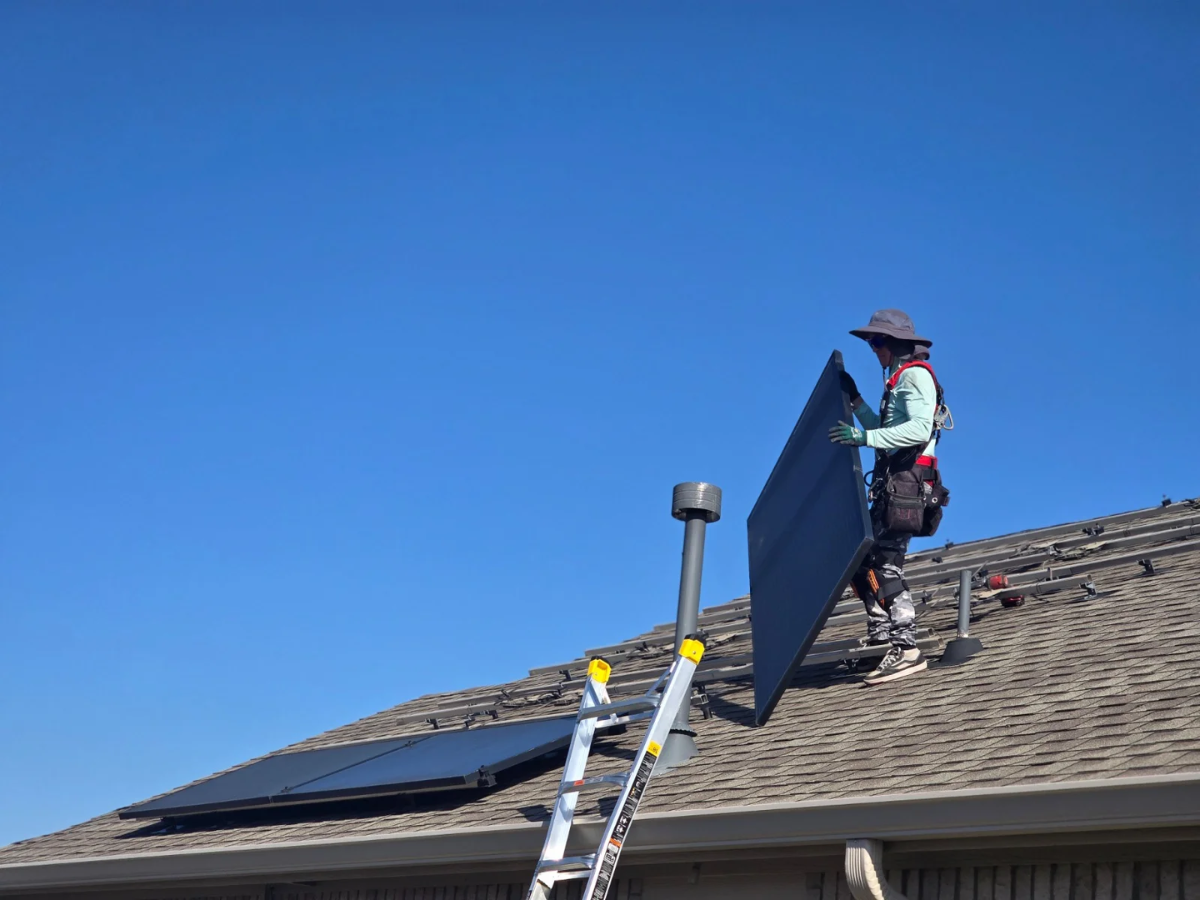

Solar Panel Removal & Reinstall in Texas — Professional Detach and Reset for Roof Replacements
Solar panel removal and reinstall — also called detach and reset — is the most requested solar service in Texas, driven by the DFW metroplex’s position in the nation’s most active hail corridor. Remove Solar Reset provides flat-rate detach-and-reset packages across 9 DFW counties, handling every step from permit filing through post-reinstallation inspection. Our TDLR-licensed crews preserve your manufacturer warranty while your roofer works underneath. Call (469) 283-1089 for your free quote.
What Detach and Reset Actually Means
Detach and reset is the industry term for a two-phase service: removing an existing solar panel system from a roof, holding the equipment safely while another trade completes work on the roof deck, and then reinstalling the same panels once the new roof is in place. The phrase “removal and reinstall” describes the same process. In the roofing and insurance worlds, you will see it abbreviated as D&R on claims paperwork and contractor invoices throughout Texas.
The process is not a simple unbolt-and-rebolt job. Each phase involves licensed electrical work governed by Texas Department of Licensing and Regulation (TDLR) requirements and the National Electrical Code. The removal phase requires de-energizing the array at the module level, disconnecting rapid shutdown equipment per NEC 690.12, pulling wiring from conduit runs, extracting roof-mounted racking and flashing, and sealing every penetration point to weatherproof the exposed deck. The reinstallation phase reverses each step, often with updated hardware where the new roofing material demands different mount types.
A detach and reset preserves your existing investment. Residential solar systems in Texas cost $15,000 to $35,000 to install new, depending on system size. A detach and reset runs $3,200 to $8,500 for the same system — saving homeowners 75-85% compared to abandoning working panels and buying replacements after a re-roof.
Why Detach and Reset Is the #1 Solar Service in Texas
Hail drives roughly 80% of all detach-and-reset jobs in the DFW metroplex. North Texas sits in what meteorologists call “Hail Alley” — the corridor stretching from Denton County south through Dallas County where warm Gulf moisture collides with cold fronts rolling off the Caprock. The ERCOT service territory that covers DFW recorded 22 significant hail events between 2020 and 2025, according to Insurance Institute for Business & Home Safety data. Each event triggers thousands of roof replacement claims, and any home with solar panels needs a detach and reset before the roofer can begin.
The timing compounds the demand. Texas experienced its largest residential solar installation boom between 2015 and 2022, when federal tax credits, falling panel costs, and Oncor’s distributed generation interconnection program drove adoption across Collin, Dallas, Tarrant, and Denton counties. Those systems now sit on composition shingle roofs that are 8-15 years old — approaching or past the point where a single hailstorm tips them from “patch” to “full replacement.” The result is a convergence: aging roofs under relatively new solar arrays, in a geography that guarantees regular hail damage. Between March and June each year, our detach-and-reset bookings increase by 300-400%.
Beyond hail, Texas homeowners request detach-and-reset service for proactive re-roofing (composition shingles lasting 15-20 years in Texas heat), system upgrades from older string inverters to Enphase microinverter platforms, attic insulation or radiant barrier installations that require a cleared roof deck, and structural repairs after wind or tornado damage. In every case, the panels come off, the underlying work gets done, and the panels go back on — same equipment, same production capacity, fraction of the cost of new.
Full Project Timeline: Permit Through Inspection
A typical detach-and-reset project in the DFW metroplex takes 2-3 weeks from initial assessment to final Oncor reconnection. The on-site solar work itself is 2 days — 1 day for removal, 1 day for reinstall. The rest of the timeline is permit processing and the roofing work in between. Emergency hail-season projects can be compressed to 10 days when permits are expedited.
Insurance Claim Coordination for Detach and Reset
Most detach-and-reset projects in DFW are triggered by hail damage insurance claims. Texas homeowner policies written by carriers like State Farm, Allstate, USAA, Liberty Mutual, and Farmers typically cover the cost of solar panel removal and reinstallation as a line item on the roof replacement claim — the panels must be removed for the roofer to access the deck, so the cost is considered part of the insured repair. The key is documentation: your carrier’s adjuster needs to see the solar system in the scope of work before approving the detach-and-reset line item.
Remove Solar Reset handles every piece of the insurance documentation process. During our initial site assessment, we photograph the existing system from multiple angles, generate a component inventory (panel count, inverter model, racking manufacturer, conduit type), and produce a written scope of work that matches the format Texas adjusters expect. We then submit directly to your adjuster or supplement the roofing contractor’s claim with the solar-specific line items. For homeowners working with public adjusters — common after major DFW hail events — we coordinate directly with their office.
We bill the insurance carrier directly on approved claims. The homeowner pays nothing out-of-pocket for the detach-and-reset portion of the project beyond their standard roof replacement deductible. This direct-billing arrangement eliminates the cash flow burden that stops many Texas homeowners from scheduling their removal promptly after a storm, which matters because delayed removals increase the risk of secondary water damage to the roof deck under the panels.
Panel Storage During Roofing
How your panels are stored between removal and reinstallation directly affects their long-term output. Silicon photovoltaic cells develop microcracks when subjected to pressure on hard surfaces — laying a panel face-down on a concrete driveway or garage floor during a re-roof can reduce that panel’s production by 5-15% permanently, according to research published by the National Renewable Energy Laboratory. The damage is invisible to the naked eye but shows up as hot spots in electroluminescence imaging and as a slow, irreversible decline in kilowatt-hour output over subsequent years.
Remove Solar Reset stores every panel vertically in purpose-built padded racks. Our standard on-site storage uses enclosed trailers with foam-lined vertical slots that keep panels separated, upright, and protected from impact during the roofing process. For projects where roofing is expected to take longer than 5 days, or where on-site space is limited, we transport panels to our climate-controlled warehouse at 11005 Indian Trail in Dallas. Warehouse storage is included free for the first 60 days on every DFW detach-and-reset project. Extended storage beyond 60 days is available at $150/month for standard residential systems.
Every stored panel is tagged with its original string position, orientation (portrait vs. landscape), and wiring sequence. This labeling system ensures reinstallation matches the original configuration exactly, which preserves the system’s electrical balance and avoids the production losses that occur when panels are reinstalled in mismatched string positions — a problem we see regularly on jobs where a roofer or unlicensed crew handled the removal.
How We Coordinate with Your Roofing Contractor
The handoff between solar removal and roofing is where most detach-and-reset projects go wrong when handled by inexperienced crews. Your roofer needs to know exactly where every mount penetration was drilled, where conduit entered the attic space, and which sections of underlayment were compromised by lag bolts. Without this information, roofers nail through areas where solar mounts will be re-drilled, creating double-penetration points that leak within the first rainy season.
Our roof map document — provided to every roofer on every DFW project — includes a scaled diagram of the roof showing the precise coordinates of each former mount point, conduit entry locations, junction box positions, and any areas where the original installer used sealant that needs to be cleaned before new shingles are laid. We mark these locations physically on the roof deck with contractor chalk before leaving the job site on removal day, so the roofing crew has both a paper reference and visible on-deck markings.
We work with over 40 roofing companies across the DFW metroplex. If you do not yet have a roofer selected, we can refer contractors from our network who understand solar roof-map protocols and have completed multiple re-roofs under active solar systems. For roofers who are new to working with solar-equipped homes, we offer a 15-minute pre-roof briefing call where we walk through the map, explain the penetration pattern, and answer questions about flashing compatibility with the new roofing material.
Warranty Preservation During Detach and Reset
The single most common cause of voided solar warranties in Texas is unlicensed removal. Roofing contractors who “just unplug the panels” to get them off the roof are not following manufacturer disconnect protocols, are not de-energizing the system properly, and are not documenting the work for warranty records. We have inspected systems after roofer-performed removals and found bent microinverter connectors, cracked optimizer housings, stripped rapid shutdown wiring, and panels stored face-down on concrete. Each of those conditions triggers a warranty denial from every major manufacturer.
Detach-and-Reset Cost vs. Buying New Panels
The decision between detach-and-reset and replacing your system with new panels comes down to straightforward math. If your existing panels are under 12 years old and producing at 85%+ of their original rated capacity, detach and reset saves you 75-85% compared to a new installation. Here is what Texas homeowners pay for each option:
| System Size | Removal Only | Full Detach & Reset | New System (Replace) |
|---|---|---|---|
| 10-15 panels (3-5 kW) | $1,800 – $2,500 | $3,200 – $4,200 | $15,000 – $20,000 |
| 16-24 panels (5-8 kW) | $2,500 – $3,500 | $4,200 – $5,800 | $20,000 – $28,000 |
| 25-40 panels (8-13 kW) | $3,500 – $5,000 | $5,800 – $8,500 | $28,000 – $38,000 |
| 40+ panels (13+ kW) | $5,000+ | $8,500+ | $38,000+ |
Every detach-and-reset quote from Remove Solar Reset includes permit fees for your specific municipality, Oncor coordination and disconnection/reconnection paperwork, panel storage for up to 60 days, a documented roof map for your roofer, full reinstallation with new flashing at every penetration, a 42-point post-reinstallation inspection, and a 10-year workmanship warranty. Insurance-covered projects are billed directly to your carrier — you pay nothing beyond your roof deductible.
Replacement only makes sense when panels are physically damaged beyond repair (cracked glass, delaminated backsheet, failed junction boxes), when the system is 20+ years old and producing below 70% of rated capacity, or when the homeowner wants to significantly upsize their array during the re-roof. For the vast majority of DFW homeowners dealing with hail damage to their roof — not their panels — detach and reset is the clear financial winner.
Why Texas Homeowners Choose Remove Solar Reset for Detach and Reset
Remove Solar Reset has operated from our Dallas headquarters at 11005 Indian Trail (Suite 111) since 2017, completing over 500 detach-and-reset projects across 9 DFW counties. Founder Fernando Alegre holds TDLR Master Electrician License #40730 and personally oversees every project from site assessment through final Oncor reconnection. Our crew holds active manufacturer certifications from Tesla, Enphase, and SolarEdge — covering the three inverter platforms that account for over 90% of residential installations across the DFW metroplex.
We built our business around the DFW hail cycle because that is where the demand is most concentrated and the stakes are highest. When a major hailstorm hits — like the June 2023 derecho that damaged roofs on over 200,000 DFW homes — homeowners need their panels off quickly so roofers can begin work before the next storm season. Delays in scheduling the detach phase push the entire re-roof timeline back by weeks, increasing the risk of secondary leaks and water damage. Our team mobilizes same-day during peak hail events, and we maintain enough padded storage capacity to handle 50+ simultaneous active projects across the metroplex.
Detach-and-Reset Service Areas Across Texas
Frequently Asked Questions
A typical detach-and-reset project in DFW takes 2-3 weeks total. The solar removal itself is completed in one day, and reinstallation takes another day after your roofer finishes. The remaining time is permit processing (2-7 business days depending on your municipality) and the roofing work. During peak hail season from March through June, we offer expedited scheduling with same-day emergency removal available.
Full detach-and-reset packages in DFW range from $3,200 for a small 10-15 panel system to $8,500 or more for systems with 40+ panels. Removal-only pricing starts at $1,800. Every quote includes permit fees, Oncor coordination, up to 60 days of panel storage, reinstallation with new flashing, and a 42-point post-reinstallation inspection. Insurance-covered hail damage projects are billed directly to your carrier.
In most cases, yes. Texas homeowner policies from carriers like State Farm, Allstate, USAA, Liberty Mutual, and Farmers typically cover solar panel removal and reinstallation as a line item on the roof replacement claim. The panels must be removed for the roofer to work, making it part of the insured repair scope. Remove Solar Reset handles all adjuster documentation and bills your carrier directly — you pay nothing beyond your standard roof deductible.
Every panel is stored vertically in padded racks — never flat on concrete, which causes permanent microcrack damage to the silicon cells. For short roofing timelines, we use enclosed on-site trailers with foam-lined vertical slots. For longer projects, panels go to our climate-controlled Dallas warehouse at 11005 Indian Trail. Storage is free for the first 60 days on every DFW project. Each panel is tagged with its string position for exact reinstallation.
Yes. We provide your roofer with a detailed roof map showing every former penetration point, conduit path, and mount location. We mark these positions physically on the roof deck with contractor chalk. We work with over 40 roofing companies across DFW and coordinate scheduling so reinstallation begins the day after roofing is complete. If you need a roofer referral, we can connect you with contractors experienced in solar-equipped homes.
Not when performed by a certified installer following manufacturer protocols. Remove Solar Reset holds active certifications from Tesla, Enphase, and SolarEdge. Each platform requires a specific shutdown and decommissioning sequence before physical removal — Tesla requires certified installer credentials, Enphase requires Enlighten platform decommissioning, and SolarEdge requires SetApp portal shutdown. We follow every step to keep your warranty intact.
Yes. Most DFW municipalities — including Dallas, Plano, Frisco, Fort Worth, Arlington, and McKinney — require an electrical permit for solar panel removal and reinstallation. Unincorporated areas fall under county jurisdiction (Collin, Dallas, Tarrant, Denton counties each have their own building permit offices). Permit fees range from $50 to $200 with review timelines of 2-7 business days. We handle all permit filing as part of our flat-rate pricing.
Because we remove and store your panels before roofing begins, they are not on the roof during the re-roof and are not at risk of roofer-caused damage. If a panel is found to have pre-existing damage during our removal inspection — cracked glass, delaminated backsheet, or a failed junction box — we document it and advise on replacement options before reinstallation. Our 10-year workmanship warranty covers any issue caused by our removal or reinstallation work.
Schedule Your Detach & Reset in Texas
Free estimates · Flat-rate pricing · No hidden fees · 10-year workmanship warranty
License #40730
SolarEdge Certified
Since 2017
Served