

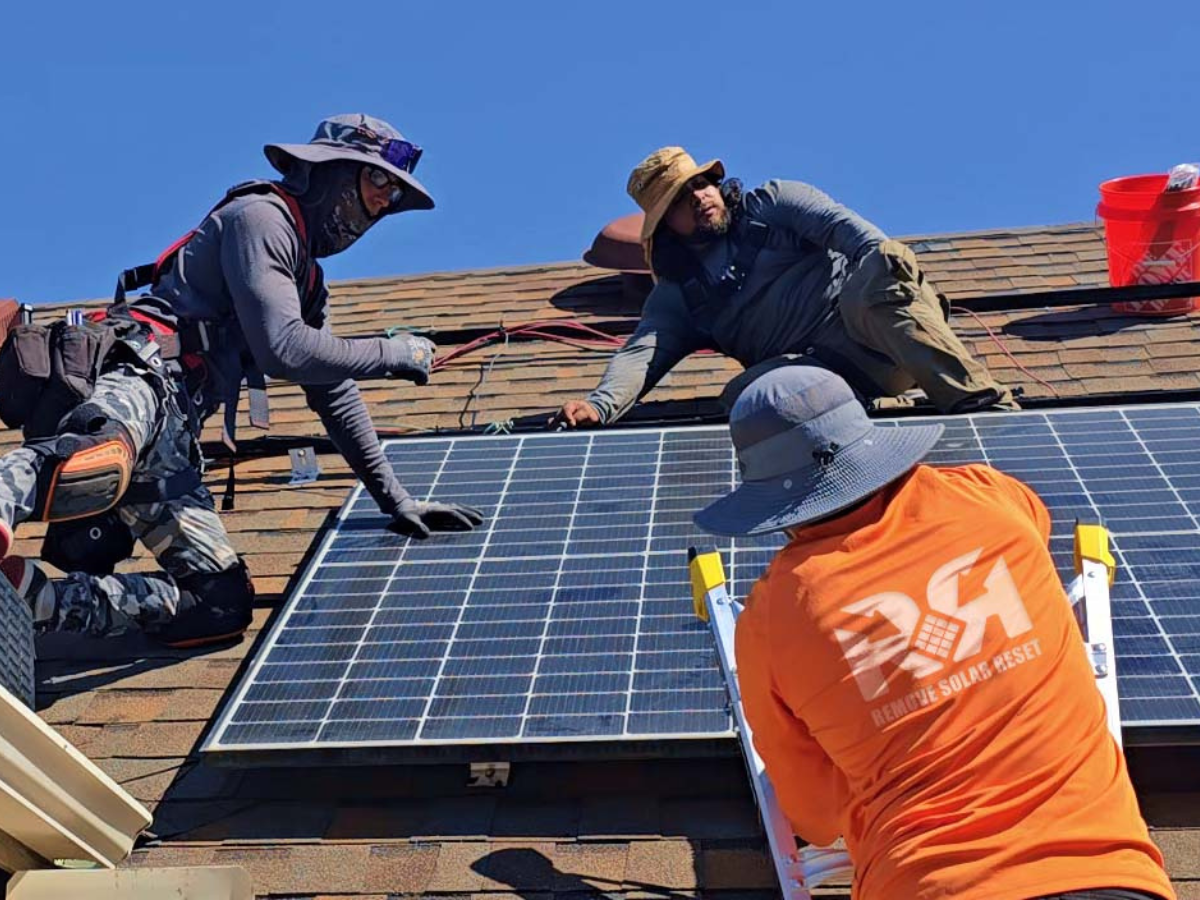

Solar Panel Repair in Texas — Expert Diagnostics & Certified Repairs Across DFW
Solar panel repair in Texas addresses the inverter failures, cracked cells, and wiring degradation that afflict residential and commercial systems across the DFW metroplex. Remove Solar Reset diagnoses and repairs all major platforms — Tesla, Enphase, and SolarEdge — from our Dallas headquarters, serving Collin, Dallas, Tarrant, Denton, Rockwall, Kaufman, Ellis, Johnson, and Parker counties. TDLR Master Electrician Fernando Alegre (License #40730) has completed 500+ solar service jobs since 2017. Call (469) 283-1089 for a free diagnostic quote.
Solar Panel Repair Demand in Texas
Texas ranks second in the nation for installed residential solar capacity at over 5.8 GW, and those systems are aging into their first major repair cycles. The earliest residential arrays installed across DFW between 2012 and 2016 are now 10-14 years old — squarely in the window where inverter failures, connector degradation, and weather-related cell damage begin appearing at scale. According to the Solar Energy Industries Association, Texas added over 27,000 residential installations in 2024 alone, which means the state’s repair backlog is growing faster than the installer base can service it.
The DFW metroplex drives a disproportionate share of Texas solar repair demand for one reason: weather. North Texas sits in the southern extension of Tornado Alley, and the ERCOT grid region spanning DFW records average summer highs of 100-105°F from June through August. That thermal cycling — 105°F daytime surfaces dropping to 75°F overnight, repeated 120+ days per year — accelerates solder joint fatigue, backsheet delamination, and ethylene-vinyl acetate (EVA) browning at rates 20-30% faster than the national average. Add 4-6 significant hail events per year across Collin, Dallas, and Tarrant counties, and DFW solar systems degrade meaningfully faster than identical panels installed in milder climates like the Pacific Northwest or mid-Atlantic.
Repair demand in DFW spikes dramatically between March and June each year. Spring hailstorms crack glass surfaces and fracture silicon cells, while lightning strikes damage surge-sensitive components like microinverters and power optimizers. Our service logs show a 350% increase in diagnostic requests during this four-month window compared to October through February. Homeowners who schedule preventive inspections before storm season catch degradation issues at the component level rather than discovering them after a hail event compounds the damage.
Types of Solar Panel Repairs in Texas
Solar repair is not a single service — it spans six distinct categories of work, each requiring different diagnostic tools, replacement parts, and manufacturer-specific procedures. Texas homeowners frequently confuse repair with removal or replacement, so understanding the scope of each repair type is critical before committing to any service quote.
Inverter Replacement — String inverters (SolarEdge, Fronius, SMA) have a typical lifespan of 10-12 years in Texas heat. When a string inverter fails, the entire array goes offline. Symptoms include zero production readings on your monitoring app, error codes on the inverter display (SolarEdge fault codes 18xx, Fronius State 509), or a tripped AC breaker at the main panel. DFW’s extreme thermal cycling shortens inverter capacitor life by 15-20% compared to manufacturer ratings. Replacement requires a TDLR-licensed electrician to disconnect the existing unit, install the replacement, reprogram string configurations, and restore Oncor interconnection.
Microinverter Swap — Enphase microinverters (IQ7, IQ7+, IQ8 series) mount behind individual panels. When one fails, only that panel’s output drops — the rest of the array continues producing. Enphase Enlighten monitoring flags failed units with a red icon and production gap. The repair involves removing the affected panel, disconnecting the trunk cable connector, swapping the microinverter, and running Enphase’s commissioning protocol to register the new serial number. Texas hail damage frequently cracks the microinverter housing without immediately killing the unit, causing intermittent failures weeks later.
Cracked Cell Repair — Hailstones as small as 1 inch in diameter can fracture the tempered glass surface and the silicon cells beneath it. Micro-cracks from smaller impacts are invisible to the naked eye but show up on electroluminescence (EL) imaging. A cracked cell reduces that panel’s output by 5-40% depending on the fracture pattern and whether it severs a bus bar connection. Panels with micro-cracks continue producing at reduced output for months before failing completely, which is why post-storm EL scans are critical in DFW. Severely cracked panels require full module replacement; hairline cracks can sometimes be bypassed with junction box rewiring.
Wiring and Connector Fixes — MC4 connectors, the standard DC connectors used on virtually all residential solar panels, degrade in Texas UV exposure. The rubber gaskets dry-rot after 8-10 years of direct sun, allowing moisture intrusion that corrodes the metal contacts and increases resistance. High-resistance connections generate heat, which compounds the degradation in a feedback loop. Symptoms include intermittent production drops, arc fault detector trips, and in severe cases, visible melting at the connector housing. Repair involves cutting out the degraded connector pair, crimping new MC4 connectors, and testing continuity across every string.
Optimizer Replacement — SolarEdge power optimizers mount behind each panel and perform maximum power point tracking (MPPT) at the module level. Failed optimizers show as grayed-out panels in the SolarEdge monitoring portal with “communication error” status. Texas heat is the primary killer — optimizers contain electrolytic capacitors rated for 85°C that routinely see 90°C+ on a dark Texas roof in July. Replacement requires removing the panel, disconnecting the optimizer from the string, installing the new unit, and pairing it through SolarEdge’s SetApp commissioning tool.
Junction Box Repair — The junction box on the back of each panel houses the bypass diodes that route current around shaded or damaged cells. In Texas, thermal cycling causes solder joints inside junction boxes to crack over 8-12 years. A failed bypass diode creates a hotspot that can permanently damage the cell string it was meant to protect. Junction box repair involves opening the enclosure, replacing the failed diode (typically a Schottky barrier diode rated for the panel’s voltage class), resoldering connections, and resealing the enclosure with UV-rated potting compound.
Our 42-Point Diagnostic Process & Certifications
The 42-point inspection is not a marketing phrase — it is a documented checklist that covers every electrical and mechanical component in a residential solar installation. The inspection starts at the main service panel and works outward: breaker integrity, rapid shutdown functionality, conduit condition, grounding electrode continuity, inverter firmware version and error history, string voltage and current measurements, individual optimizer or microinverter communication status, MC4 connector resistance testing, panel surface inspection for glass fractures, thermal imaging for hotspots, and EL imaging for cell-level micro-cracks. The full inspection takes 2-3 hours for a typical 20-30 panel DFW residential system.
Manufacturer-specific troubleshooting matters because each platform fails differently. Tesla systems use proprietary inverters and Powerwall battery integration — diagnosing a Tesla system requires access to the Tesla installer portal and familiarity with their unique error code taxonomy. Enphase microinverter systems require trunk cable segment testing and Envoy gateway diagnostics that are completely different from string inverter troubleshooting. SolarEdge optimizer-based systems require SetApp commissioning, optimizer-level pairing, and specific firmware compatibility checks between the inverter and each optimizer generation. A generic solar technician without platform-specific training misdiagnoses 30-40% of issues we see on referral callbacks.
Repair Mistakes Texas Homeowners Make
Step-by-Step Repair Process
Most solar panel repairs in Texas are completed in a single site visit lasting 3-6 hours after the diagnostic inspection. Complex multi-component repairs (inverter replacement combined with optimizer swaps, for example) may require a second visit. Total project timeline from first call to restored production is typically 5-10 business days, including parts sourcing. Emergency storm damage diagnostics are available same-day during March-June hail season across all 9 DFW counties.
What Does Solar Panel Repair Cost in Texas?
Repair costs depend on the specific component that failed, whether replacement parts are in stock, and how many components need attention. DFW repair pricing runs 10-15% above the statewide average because demand from storm damage keeps qualified technicians at capacity during peak season. Here is what Texas homeowners typically pay for common solar repairs:
| Repair Type | Parts Cost | Labor Cost | Total Installed |
|---|---|---|---|
| String Inverter Replacement | $1,200 – $2,500 | $400 – $800 | $1,600 – $3,300 |
| Microinverter Swap (per unit) | $180 – $350 | $150 – $300 | $330 – $650 |
| Cracked Panel Replacement | $350 – $800 | $200 – $400 | $550 – $1,200 |
| Wiring / MC4 Connector Repair | $50 – $150 | $200 – $400 | $250 – $550 |
| Power Optimizer Replacement (per unit) | $120 – $250 | $150 – $300 | $270 – $550 |
| Junction Box / Bypass Diode Repair | $30 – $80 | $150 – $250 | $180 – $330 |
| Full System Diagnostic (42-point) | — | $250 – $450 | $250 – $450 |
Diagnostic inspection fees are credited toward the repair cost if you proceed with the recommended work. Insurance-covered storm damage repairs — cracked panels, hail-damaged microinverters, lightning-struck inverters — are billed directly to your carrier. We handle the documentation, adjuster coordination, and Oncor paperwork for Texas homeowners at no additional cost. For systems where repair costs exceed 50% of replacement value, we provide a transparent analysis comparing repair, full system replacement, and complete removal so you can make an informed decision.
Why Texas Homeowners Choose Remove Solar Reset for Repairs
Remove Solar Reset is not a general solar installer that offers repair as an afterthought — diagnostics and repair are our core competency. Founder Fernando Alegre built the company around the gap he saw in the Texas market: thousands of solar systems aging into their first repair cycles, serviced by installers who would rather sell a new system than troubleshoot a failing one. Our Dallas headquarters at 11005 Indian Trail (Suite 111) stocks replacement inverters, microinverters, optimizers, and connector kits so most repairs ship same-day rather than waiting on manufacturer back-orders.
Fernando holds TDLR Master Electrician License #40730 and active manufacturer certifications from Tesla, Enphase, and SolarEdge. These are not decorative — each certification grants access to manufacturer diagnostic portals, warranty claim systems, and technical support escalation paths that uncertified technicians cannot access. When a SolarEdge inverter throws a fault code that the generic troubleshooting guide cannot resolve, our team opens a case directly with SolarEdge engineering. When an Enphase microinverter fails within its 25-year warranty window, we process the warranty replacement through Enphase’s certified channel at zero parts cost to the homeowner.
Texas weather does not wait for business hours. During March-June hail season, our emergency diagnostic line operates 7 days a week across all 9 DFW counties. A lightning strike that kills your inverter on a Saturday afternoon gets a same-day assessment — not a Monday morning callback. That responsiveness matters when your 8kW array is offline and your Oncor net metering credits are ticking away at $0.08-$0.12 per kWh.
Solar Panel Repair Service Areas in Texas
Frequently Asked Questions
The six most common repairs we perform across DFW are inverter replacement, microinverter swaps, cracked cell or panel replacement, MC4 wiring and connector repair, power optimizer replacement, and junction box bypass diode repair. Texas heat and hail accelerate all of these failure modes compared to milder climates. Inverter failures and cracked panels from hail account for roughly 60% of our repair volume.
Solar repair costs in Texas range from $180 for a junction box diode repair to $3,300 for a full string inverter replacement. Microinverter swaps run $330-$650 per unit, optimizer replacements $270-$550, and wiring repairs $250-$550. A 42-point diagnostic inspection costs $250-$450, credited toward the repair if you proceed. Storm damage repairs are typically covered by homeowner insurance.
Most single-component repairs are completed in 3-6 hours after the diagnostic inspection. Multi-component repairs involving inverter replacement combined with optimizer swaps may require a second visit. Total project timeline from first call to restored production is 5-10 business days including parts sourcing. Emergency storm damage diagnostics are available same-day during March-June hail season across all 9 DFW counties.
Not when a manufacturer-certified technician performs the work. Remove Solar Reset holds active certifications from Tesla, Enphase, and SolarEdge. We process warranty replacements directly through each manufacturer’s certified channel. If your microinverter or optimizer is within its warranty period (typically 25 years for Enphase, 25 years for SolarEdge optimizers), the replacement part costs you nothing — you pay only for our labor to install it.
Most Texas homeowner policies cover solar panel repair when the damage results from a covered peril — hail, wind, lightning, or falling debris. DFW counties average 4-6 significant hail events per year, and carriers like State Farm, Allstate, USAA, and Liberty Mutual routinely approve repair claims. We handle insurance documentation, adjuster coordination, and direct carrier billing at no extra cost to Texas homeowners.
No — and it is dangerous to attempt. Solar panels produce DC voltage whenever exposed to sunlight, and there is no off switch on the roof. Even with the inverter shut down, DC wiring carries 30-600 volts depending on string configuration. Texas TDLR requires a Master Electrician license for solar electrical work. DIY repair also voids manufacturer warranties and creates liability issues with your homeowner insurance policy.
Replace when repair costs exceed 50% of the replacement value, when panels have multiple cracked cells affecting more than 30% of output, when the system is 20+ years old with widespread EVA browning, or when your inverter platform has been discontinued and replacement parts are no longer available. We provide a transparent repair-vs-replace-vs-remove cost comparison after every diagnostic so you can make an informed decision based on actual numbers.
Yes. During March-June hail season, our emergency diagnostic line operates 7 days a week across all 9 DFW counties. Lightning-struck inverters, hail-shattered panels, and storm-damaged wiring get same-day assessment. Our Dallas warehouse stocks common replacement parts so emergency repairs can often be completed within 24-48 hours of the diagnostic visit rather than waiting weeks for manufacturer shipments.
Need a Solar Panel Repair in Texas?
Free diagnostics · Itemized repair quotes · Warranty-safe procedures · 5-year repair warranty
License #40730
SolarEdge Certified
Since 2017
Served