


Solar Panel Relocation Services in Texas — Move, Reposition & Transfer Your System in DFW
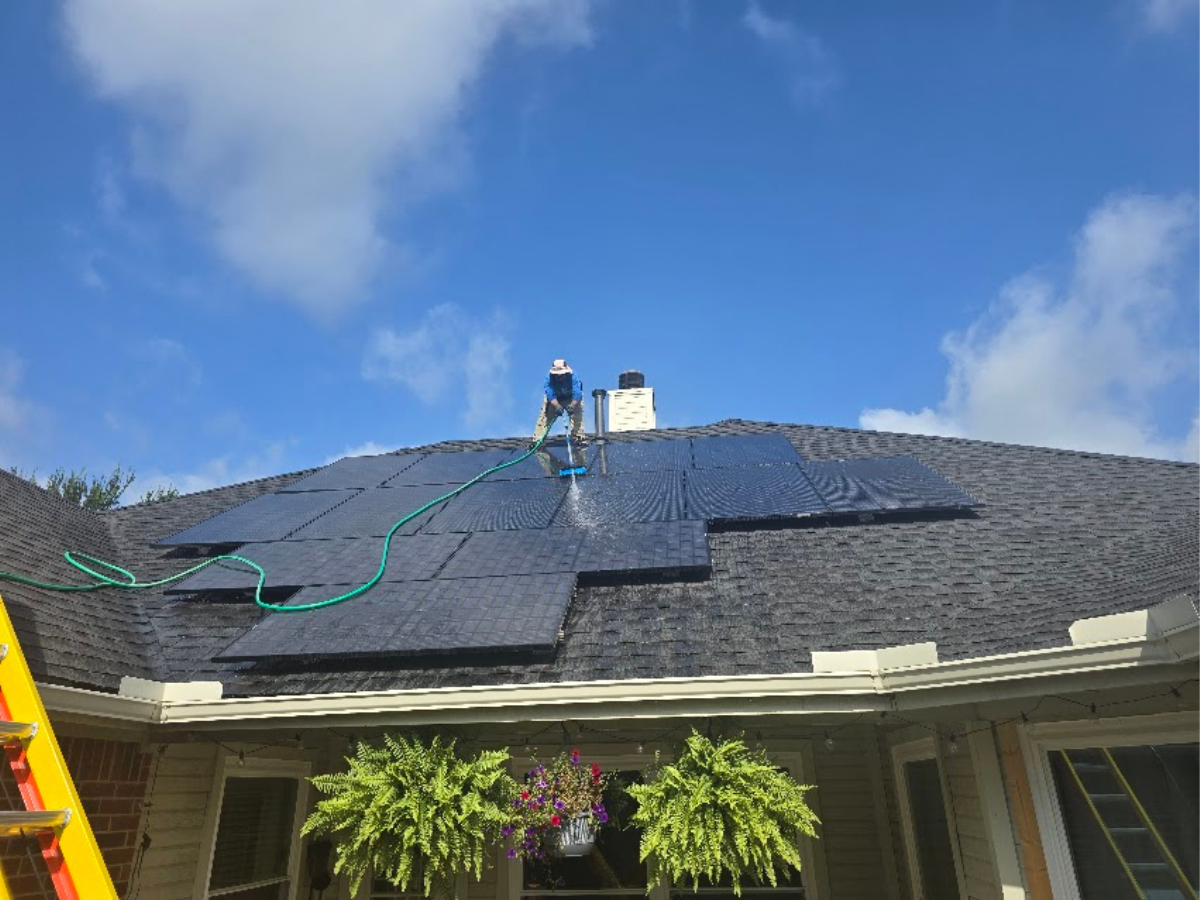
Solar panel relocation in Texas covers everything from repositioning panels on the same roof for better sun exposure to physically transferring an entire system to a new home across the DFW metroplex. Remove Solar Reset specializes in panel relocation engineering — dismounting, transporting, re-engineering electrical connections, and filing fresh TDLR permits at the destination address. Whether you are moving from Plano to McKinney or shifting panels from your primary roof to a detached garage, call (469) 283-1089 to schedule a relocation assessment.
When Relocation Makes Sense vs. Buying New Panels
Not every solar system is a good candidate for relocation. The decision hinges on three factors: panel age, degradation rate, and the cost gap between moving existing equipment versus installing new modules at the destination. Panels manufactured after 2018 using monocrystalline PERC cells typically degrade at 0.3-0.5% per year, meaning a 5-year-old system still operates at 97-98% of its original rated output. Relocating those panels makes clear financial sense because the hardware retains most of its productive life.
Older polycrystalline systems installed during Texas’s 2012-2016 solar boom present a tighter calculation. Those panels degrade at 0.5-0.8% annually and may be running at 88-92% capacity after a decade. At that degradation level, the $3,500-$6,000 cost of relocation starts competing with the $8,000-$12,000 price of a brand-new system that comes with a fresh 25-year warranty and 15-20% higher per-panel wattage thanks to newer cell technology. The crossover point — where buying new beats relocating — generally lands around the 12-year mark for systems originally sized under 6 kW.
Texas homeowners should also factor in the federal Investment Tax Credit (ITC), which currently covers 30% of new solar installation costs through 2032. A relocated system does not qualify for the ITC at the new address because it is not a new installation. That 30% credit can close the gap quickly — a $12,000 new system effectively costs $8,400 after the ITC, while relocating a 10-year-old system at $5,500 delivers lower output with no tax benefit. We walk every DFW homeowner through this math during the initial assessment.
Same-Roof Repositioning for Better Sun Exposure
Same-roof repositioning is the most common relocation request we handle in the DFW area. The typical scenario: a homeowner’s system was originally installed on a west-facing roof plane because the south-facing section was shaded by a mature live oak or pecan tree. After the tree was removed — either by choice or after one of North Texas’s frequent ice storms — the south-facing plane now receives 25-35% more direct sunlight between 10 AM and 2 PM during peak production months. Repositioning the panels to that newly exposed surface can recover 400-600 kWh of annual production on a typical 8 kW residential array.
In DFW’s suburban neighborhoods — particularly in Collin County communities like Prosper, Celina, and Anna where new construction is still expanding — homeowners who added a second-story addition or expanded their roof footprint sometimes need panels shifted to accommodate the structural changes. The repositioning process involves removing the existing racking system, sealing all former roof penetrations with flashing-grade sealant rated for Texas’s 105-degree summers, and engineering a new mounting layout on the target roof section. If the conduit run from the new panel location to the existing inverter changes by more than 15 feet, wire gauge and voltage drop recalculations become necessary under NEC 2020 Article 690.
The permitting process for same-roof repositioning in most DFW municipalities is lighter than a full relocation. Dallas, Plano, and Frisco classify same-address work as a modification to the existing solar permit rather than a new installation, which typically reduces review time from 5-7 days to 2-3 days. Oncor’s interconnection agreement remains valid because the system address has not changed — you simply notify them of the updated array configuration.
Building-to-Building Panel Transfers
Building-to-building transfers account for roughly 15% of our relocation projects across DFW. The most frequent scenario involves moving panels from a primary residence’s roof — typically because of a re-roof, structural issue, or aesthetic preference — to a detached garage, barn, or workshop on the same property. In rural areas of Ellis County, Johnson County, and Parker County, we also see transfers from aging metal-roof barns to newly constructed steel shop buildings with better orientation and structural integrity.
The engineering challenge in building-to-building work centers on the electrical run between structures. A standard residential solar system produces 300-600 volts DC at the string level. Running that voltage across 50-100 feet of conduit between buildings introduces voltage drop that can reduce system efficiency by 2-5% if undersized wire is used. We calculate the exact wire gauge needed using NEC Chapter 9 Table 9 values for the specific conduit length and ambient temperature — which matters in Texas, where conduit surface temperatures in direct sun can exceed 150 degrees Fahrenheit in July and August, requiring temperature derating per NEC 310.15(B).
Taking Your Solar System to a New Home
Electrical Re-Engineering for Relocated Systems
Solar panel relocation is never a simple unmount-and-remount job. Every relocation involves electrical re-engineering because no two roofs share the same geometry, conduit path, or inverter configuration. Budget 3-5 weeks for a complete home-to-home relocation in the DFW metroplex including permits at both addresses, Oncor re-interconnection, and final inspection at the destination.
What Does Solar Panel Relocation Cost in Texas?
Relocation pricing varies significantly based on the type of move. Same-roof repositioning is the most affordable because the electrical service point and interconnection remain unchanged. Building-to-building transfers add conduit engineering costs. Home-to-home relocations carry the highest price tag because they involve double permits, transport logistics, and a complete re-engineering of the electrical system at the new address. Here is what DFW homeowners typically pay:
| Relocation Type | Cost Range | Timeline | Permits Required |
|---|---|---|---|
| Same-Roof Reposition (10-20 panels) | $2,200 – $3,800 | 1-2 days on-site | Modification permit only |
| Same-Roof Reposition (20-40 panels) | $3,800 – $6,500 | 2-3 days on-site | Modification permit only |
| Building-to-Building (same property) | $4,500 – $8,000 | 2-4 days on-site | New electrical permit |
| Home-to-New-Home (10-20 panels) | $5,500 – $9,000 | 3-5 weeks total | Decommission + new install permit |
| Home-to-New-Home (20-40 panels) | $9,000 – $14,500 | 4-6 weeks total | Decommission + new install permit |
These prices include all TDLR permit fees, Oncor interconnection coordination (new agreement for home-to-home moves), structural assessment at the destination, electrical re-engineering, and a 42-point post-installation inspection. Transport between DFW addresses within our 9-county service area is included at no extra charge. For relocations requiring NEC 2020 rapid shutdown upgrades on older systems, add $800-$2,000 depending on panel count.
Why DFW Homeowners Trust Remove Solar Reset for Relocations
Solar panel relocation demands a different skillset than standard removal and reinstallation. Relocation projects involve production modeling at the destination, structural analysis of a roof the installer has never worked on before, and electrical engineering that accounts for completely new conduit runs, wire gauges, and inverter configurations. Remove Solar Reset is one of the only companies in the DFW metroplex that handles the full relocation scope in-house — from origin decommission to destination engineering to Oncor re-interconnection — without subcontracting any portion of the work.
Founder Fernando Alegre (TDLR Master Electrician License #40730) has personally engineered over 80 relocation projects across Dallas, Collin, Tarrant, Denton, and Rockwall counties since 2017. Our team uses PVsyst production modeling to verify that the relocated system will perform within 5% of its original rated output at the new location — and if it will not, we tell you upfront so you can make an informed decision between relocating and buying new. We hold active certifications from Tesla, Enphase, and SolarEdge, covering the three inverter platforms found in over 90% of DFW residential installations.
Solar Panel Relocation Service Areas in Texas
Frequently Asked Questions
It depends on system age and size. Panels under 10 years old with monocrystalline PERC cells typically retain 95-97% of their original output, making relocation cost-effective at $2,200-$9,000 versus $8,000-$15,000 for new. Systems older than 12 years with polycrystalline panels may produce less than new panels that also qualify for the 30% federal ITC. We provide a free side-by-side cost analysis for every relocation inquiry.
Yes, if you own the panels outright. Leased systems from Sunrun, Vivint, or Tesla typically cannot be relocated without a lease buyout. For owned systems, you need a decommission permit at your old address and a new installation permit at the destination. Oncor requires a fresh interconnection agreement at the new home. Total timeline for a DFW home-to-home relocation runs 3-6 weeks including permits and utility coordination.
Same-roof repositioning in the DFW area costs $2,200 to $6,500 depending on system size. A 10-20 panel reposition runs $2,200-$3,800 and takes 1-2 days on-site. Larger 20-40 panel systems cost $3,800-$6,500 and take 2-3 days. Pricing includes sealing all original roof penetrations, new mounting hardware, and a modification permit with your local building department.
Permit requirements depend on the relocation type. Same-roof repositioning needs a modification permit from your local building department. Building-to-building transfers require a new electrical permit because the service connection point changes. Home-to-home moves need two permits — a decommission at the origin and a new installation permit at the destination. TDLR requires a licensed Master Electrician for all solar electrical work in Texas.
The panels themselves do not lose efficiency from being physically moved if handled correctly — no microcracks from improper storage, no connector damage, no cell fractures from transport vibration. However, production at the new location changes based on roof pitch, azimuth, and shading. A south-facing 6:12 pitch roof in Texas produces roughly 15-20% more annual energy than a west-facing 4:12 pitch roof. We model production at the destination before you commit to the relocation.
Yes. Remove Solar Reset carries full commercial general liability and inland marine insurance that covers solar panels during transport between DFW locations. Panels are stored vertically in custom padded racks inside our enclosed trailer — never stacked flat, never exposed to weather. Your homeowner’s insurance typically does not cover panels once they are removed from the roof, which is why our transport coverage is critical during the relocation window.
A complete home-to-home relocation in the DFW metroplex takes 3-6 weeks from start to finish. That breaks down to 1 day for removal at the origin, 2-7 business days for decommission permit closure, 5-10 business days for the new installation permit at the destination, 1-2 days for reinstallation, and 10-15 business days for Oncor to process the new interconnection agreement. On-site work totals 2-3 days — the rest is permit and utility processing time.
Most owned residential solar systems can be relocated. We handle all major panel brands (LG, REC, Canadian Solar, Q Cells, Hanwha) and all three dominant inverter platforms in Texas — SolarEdge string inverters with optimizers, Enphase IQ microinverters, and Tesla Powerwall-integrated systems. Ground-mounted systems, carport installations, and commercial arrays can also be relocated with additional structural engineering. Leased systems require a lease buyout before relocation is possible.
Ready to Relocate Your Solar System?
Free relocation assessments · New-vs-relocate cost comparison · 10-year workmanship warranty
License #40730
SolarEdge Certified
Across DFW
Served